The Saga of Seven Suns · The World
The Spiral Arm
Three branches of humanity, one ancient empire, four elemental races whose war began ten thousand years ago, and the empty cities of a vanished hive.
The Spiral Arm is the stretch of the Milky Way settled by the Ildiran Empire and the colonies of Earth, and the stage for Kevin J. Anderson’s seven-novel Saga of Seven Suns (2002–2008). By 2427, when Hidden Empire opens, humanity has spread across many worlds on borrowed stardrives and split three ways, into the Earth-based Hansa, the forest world Theroc and the clan-ruled Roamers. It shares the Arm with the ancient Ildirans and with the empty ruins of the vanished Klikiss.
This page is the reference shelf: who the powers are, where they live and what they want, and the far older war among four elemental races that a human experiment reopens on the first page. Its frames are places and institutions rather than scenes; the seven book pages carry the plots.
It describes the world as the whole saga eventually reveals it, so it gives away secrets the books keep for hundreds of pages: what the worldforest really is, what the Klikiss robots did, and what the Ildirans always knew.
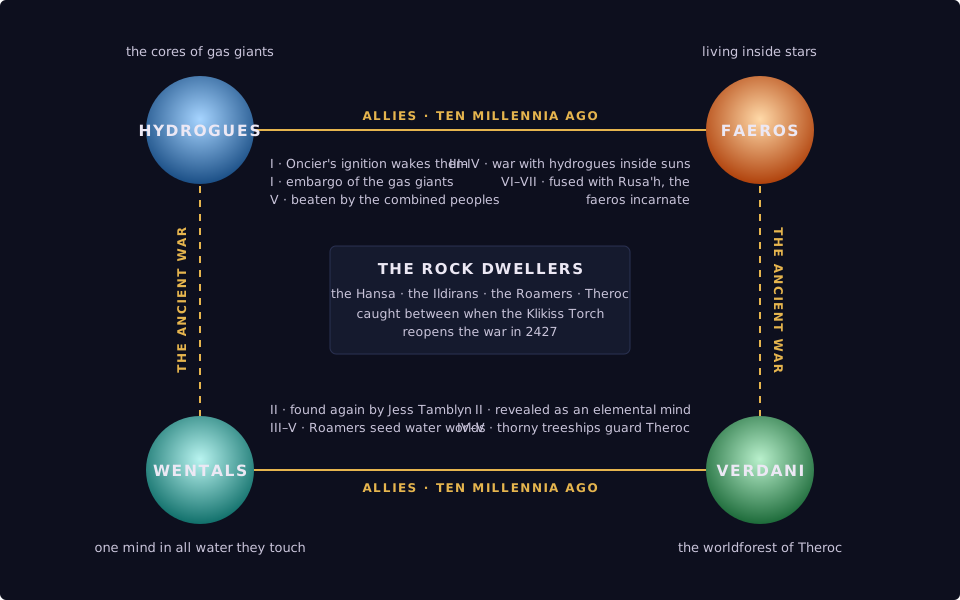
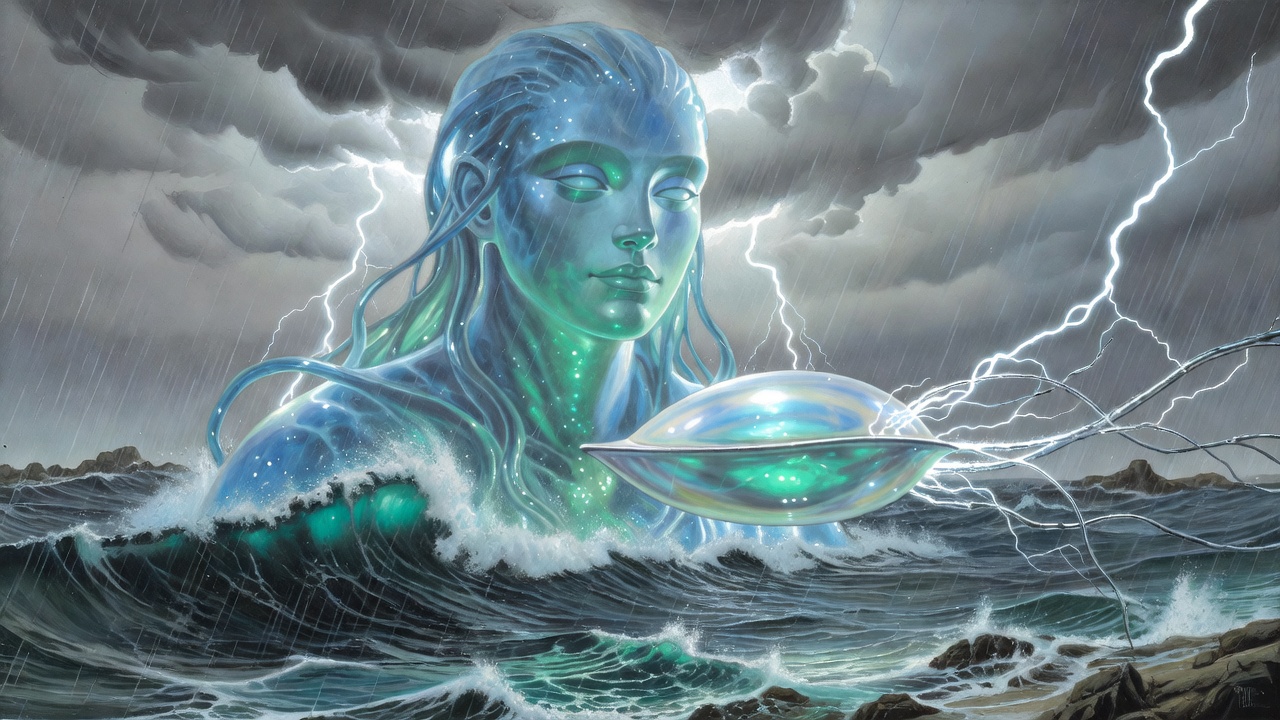
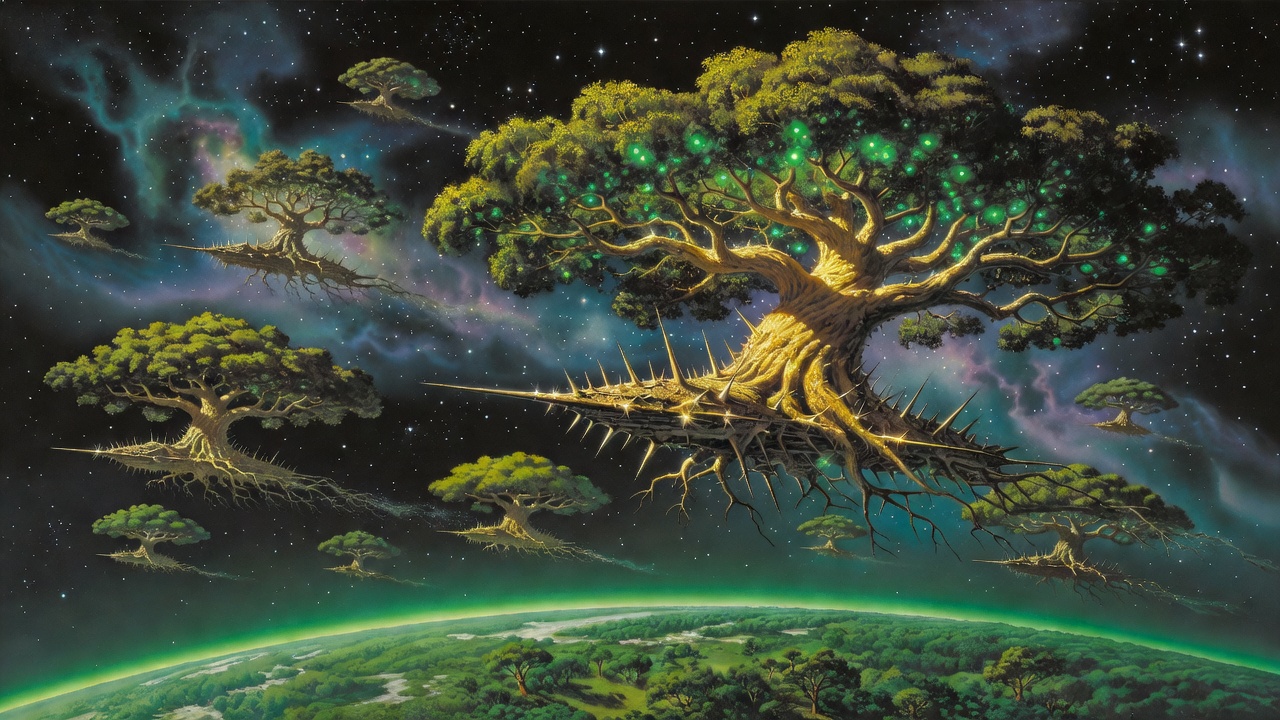
The elemental war, drawn from the research: hydrogues and faeros against wentals and verdani ten millennia ago, and where each race turns in the seven books.
The deep past and first contact
Ten thousand years before the saga opens, four kinds of elemental being fight a war across the Spiral Arm. On one side are the hydrogues, who live in the crushing cores of gas giants, and their allies the faeros, living fire that dwells inside stars; on the other are the wentals, a mind made of water, and the verdani, a mind that grows as forest. The verdani lose, and what is left of them flees to a jungle world; the wentals are left all but extinct. Thousands of years ago, too, the insectlike Klikiss vanish, leaving empty cities and a race of black robots that claim to remember nothing. The Ildirans live through it, and their Mage-Imperators cut it out of the Ildiran epic and keep the memory to themselves.
Around 2100 Earth launches eleven slow generation ships at the stars and, within a few generations, all but forgets them. One hundred and eighty-three years before Hidden Empire, the Ildirans find the first of them, the Caillié, and settle its colonists on that same jungle world, Theroc. Within five years they have found all but one of the rest and come to Earth itself, offering humanity the Ildiran stardrive and hundreds of unclaimed habitable worlds. The last ship, the crippled Burton, is towed to the Ildiran colony of Dobro.
The colonies that follow fly on Ildiran stardrives, which burn ekti, an exotic form of hydrogen harvested from gas giants. Three human peoples take shape in that first decade, as the prequel Veiled Alliances (a 2004 graphic novel, retold in prose in 2011) shows. On Theroc a fourteen-year-old colonist, Thara Wen, flees into the worldforest and walks out of it hairless and emerald-skinned, the first green priest. The refugees of the Kanaka, whose colony has failed, take over three unprofitable Ildiran skymines at Daym and make them pay: the beginning of the Roamers. And on Earth the Hansa’s Chairman runs the planet through a king he coaches line by line.
The Terran Hanseatic League
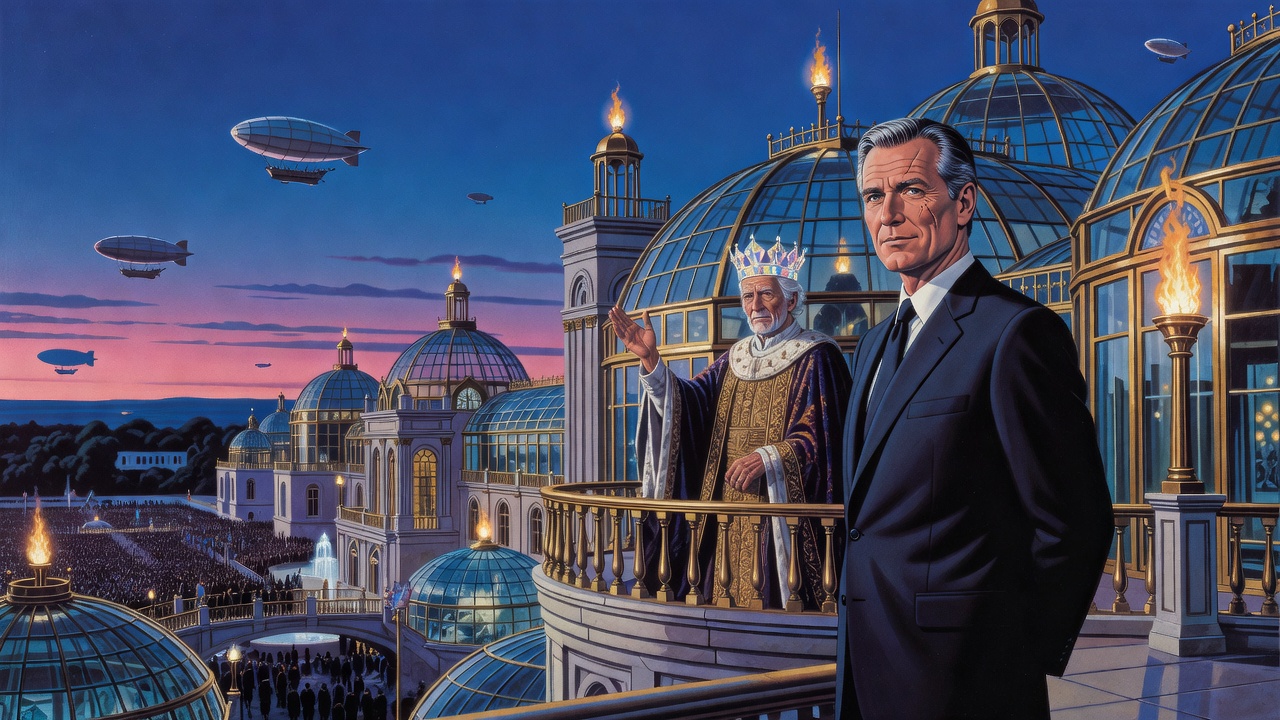
The Hansa, the Terran Hanseatic League, is a trading league that became a government. By 2427 it rules Earth and its colonies, and it has two heads. The Great King appears on the balcony and gives the speeches; the Chairman chooses him, trains him and decides. Old King Frederick, crowned in 2381, was chosen for his looks, his charisma and his way with a speech. The Chairman since 2406 is Basil Wenceslas, who in the first book picks a fourteen-year-old street boy to be the next king.
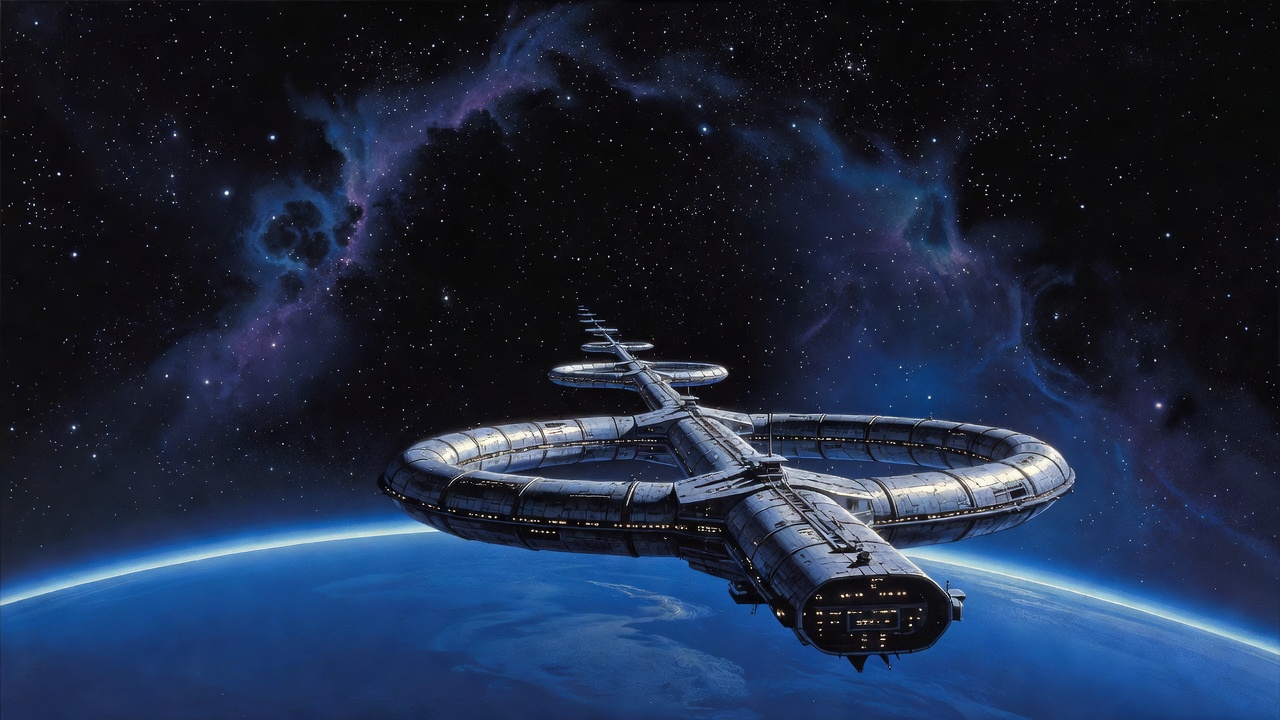
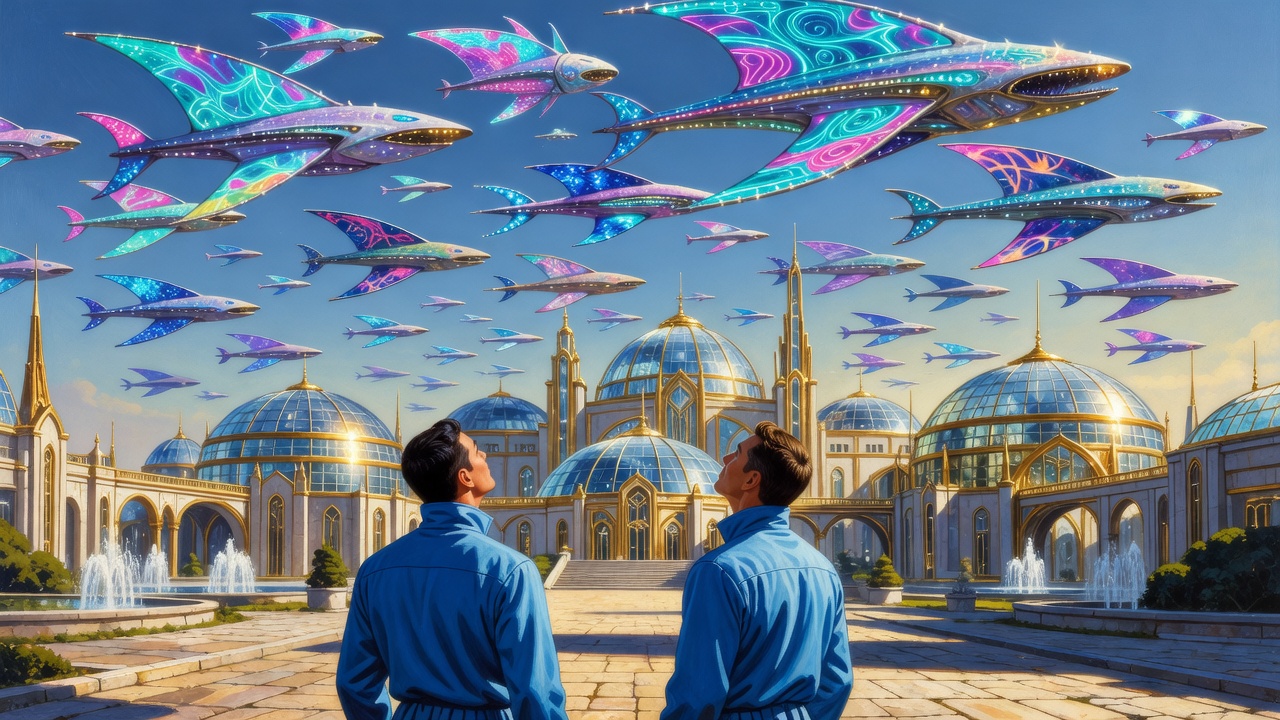
The seat of it all is the Whisper Palace, in what was once southern California: always-lit cupolas and domes of glass on gilded titanium braces, so overwhelming that visitors fall silent before it, which is how it got its name. It has been enlarged to keep pace with the architecture of the Ildirans, and the pyramidal headquarters of the Hansa stands nearby. The state religion is Unison, under a symbolic Archfather; the common language is Trade Standard.
The Earth Defense Forces, the “Eddies”, fly Juggernaut battleships and Manta cruisers from their headquarters on Mars. Humans are served by compies, small robots in Friendly, Teacher and other models; one of the oldest, the Teacher compy OX, came home from the generation ship Peary and has tutored kings ever since. From the second book the EDF also builds Soldier compies on Klikiss-robot technology, a bargain it will regret. Across seven books the Hansa’s story is Basil’s: a Chairman who meets an alien war by tightening his grip, turns the EDF on the Roamers and on his own colonies, and drives his King and Queen to found a rival government.
The Ildiran Empire
The Ildirans are the elder civilization of the Arm, at the height of their power: nearly human outside, profoundly different within. Their home is Ildira, under the light of seven suns.
“Night never fell on Ildira.”
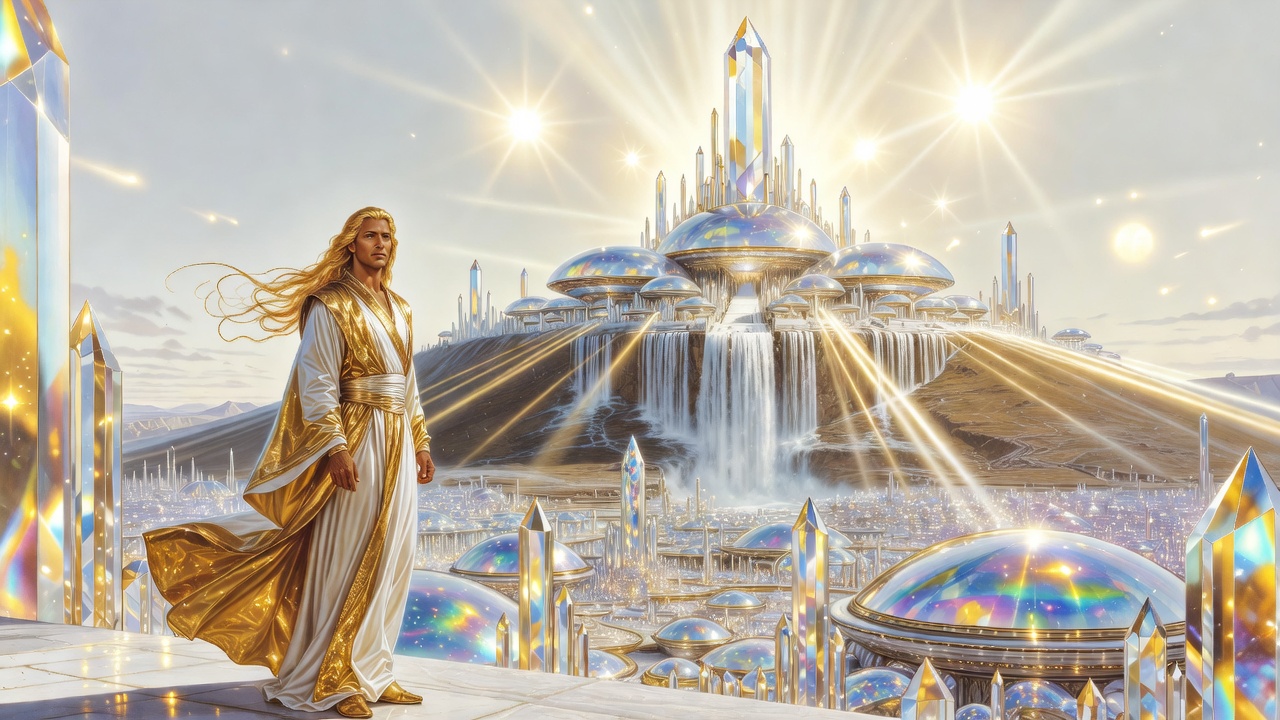
The capital, Mijistra, is a city of crystal. Above it the Prism Palace, a building of hemispheres and ellipsoids, stands on a smooth ellipsoidal hill from which seven streams radiate, and waterfalls tumble upward to meet it. Beneath it, in the ossuarium, the skulls of dead Mage-Imperators glow.
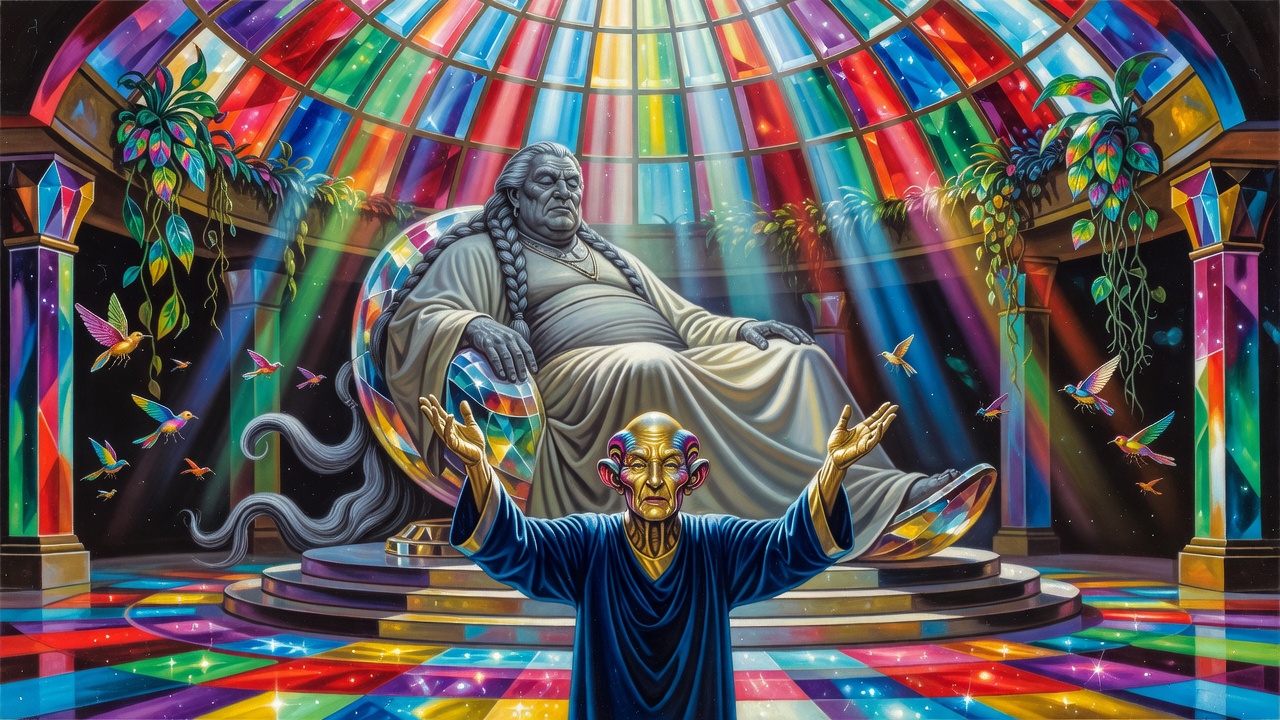
The Mage-Imperator is the Empire’s god-emperor. He reclines in the chrysalis chair; his heir is the Prime Designate, and his other noble sons rule Ildiran worlds as Designates. Through the thism, a faint racial telepathy, every Ildiran is joined to him, and in it he and the lens kithmen glimpse the Lightsource, the Ildiran heaven made of light. Cut off from the thism, Ildirans suffer, so a Designate who spins a thism web of his own, as Rusa’h does in the third and fourth books, splits the Empire. When the saga opens the Mage-Imperator is the vast, ailing Cyroc’h, and the Prime Designate is his son Jora’h, whose golden hair moves of its own accord.
Ildirans are born into kiths (noble, soldier, rememberer, lens, attender, worker and many more), and only the higher kiths look like humans; rememberers have lobes on their faces that flush with feeling. The rememberers keep the Saga of Seven Suns, which gives the series its title: the Ildirans’ own epic of history and legend, its official text set down on great crystal sheets in the Hall of Rememberers. It has a gap, the Lost Times, and a rememberer who finds them in the first book is murdered for it; its legends speak of the Shana Rei, creatures of darkness.
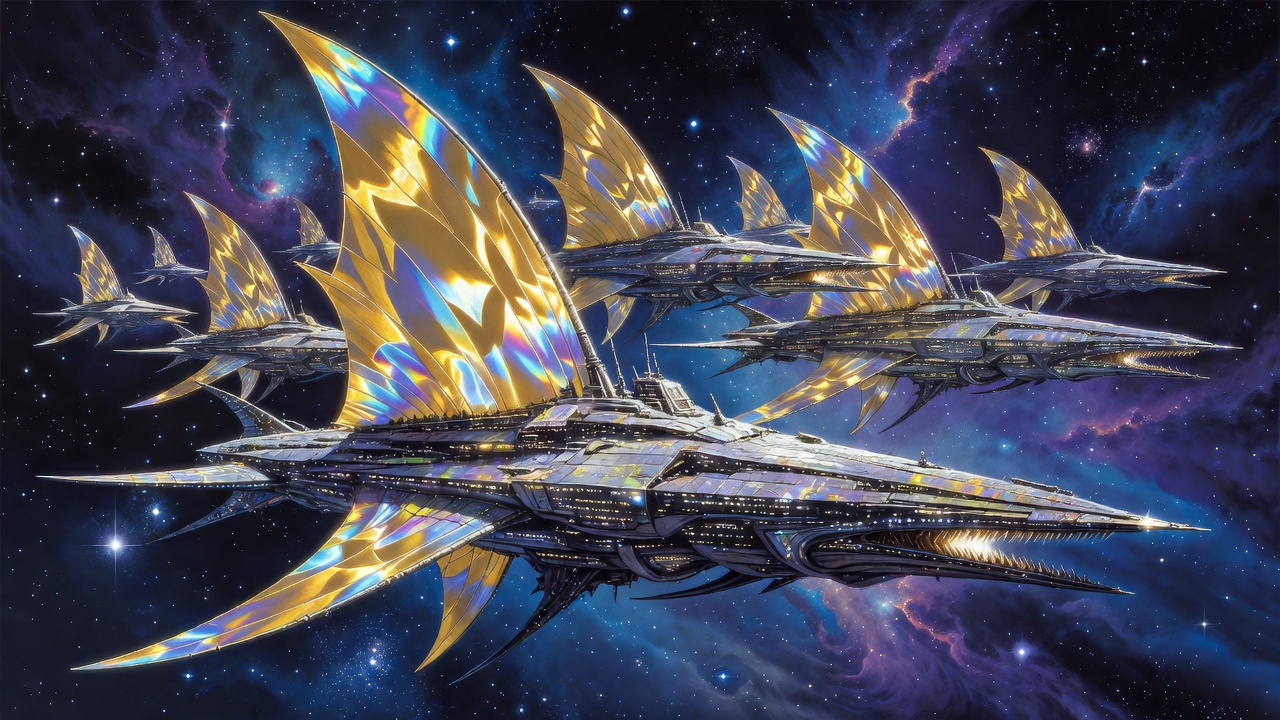
Behind the huge, gaudy warliners of its Solar Navy, the Empire keeps its oldest secret. The Mage-Imperators have always known the hydrogues would come back, and on Dobro, among the descendants of the Burton’s colonists, they run a hidden human–Ildiran breeding programme meant to produce a mind that can bridge to the hydrogues. As the Dobro Designate tells Jora’h in the second book:
“Human folly reawakened the hydrogues, but we have always known they would return.”
The Roamers
The Roamers descend from the Kanaka’s people: a loose confederation of independent clans (Tamblyn, Peroni, Okiah, Kellum and many more) who would rather live on ships, stations and hidden bases than on planets. They are led by a Speaker, Jhy Okiah when the saga opens, swear by the Guiding Star, call the Hansa “Big Goose”, and are “Roachers” to those who dislike them.
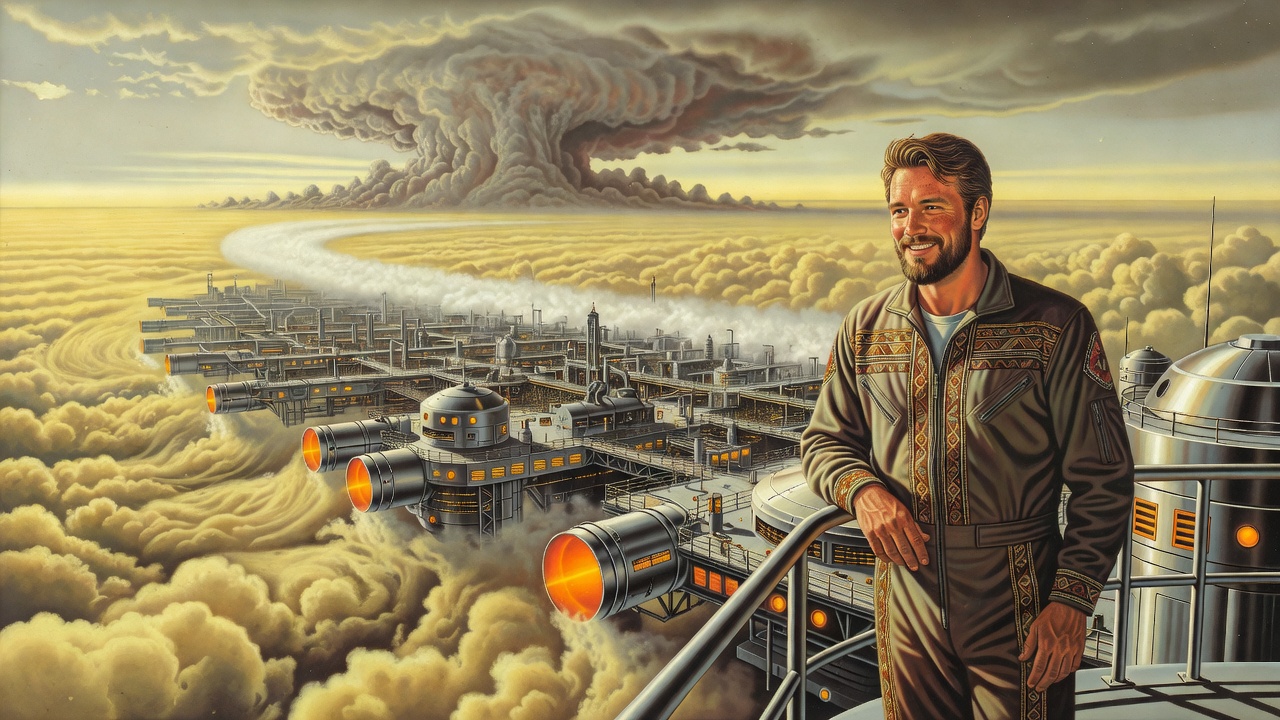
Their trade is ekti, and they make most of it. A skymine is a floating factory that rides the cloud tops of a gas giant and turns its hydrogen into stardrive fuel. The trade makes the Roamers rich, independent and exposed: when the hydrogues claim the gas giants, the Roamers are hit first and hardest.
Their other places are kept secret. Rendezvous, the hidden centre of Roamer government, is a cluster of asteroids held together by girders and cables around a garnet-coloured dwarf star; Clan Kellum builds ships in the rings of Osquivel; the Tamblyns mine water from the oceans under the ice of Plumas. Secrecy does not save them. When the Roamers cut off the Hansa’s ekti, Basil declares war on them; the EDF destroys Rendezvous at the end of the third book and the clans scatter. By the sixth they have joined the Confederation. Meanwhile one Roamer, Jess Tamblyn, has found the wentals.
Theroc and the worldforest
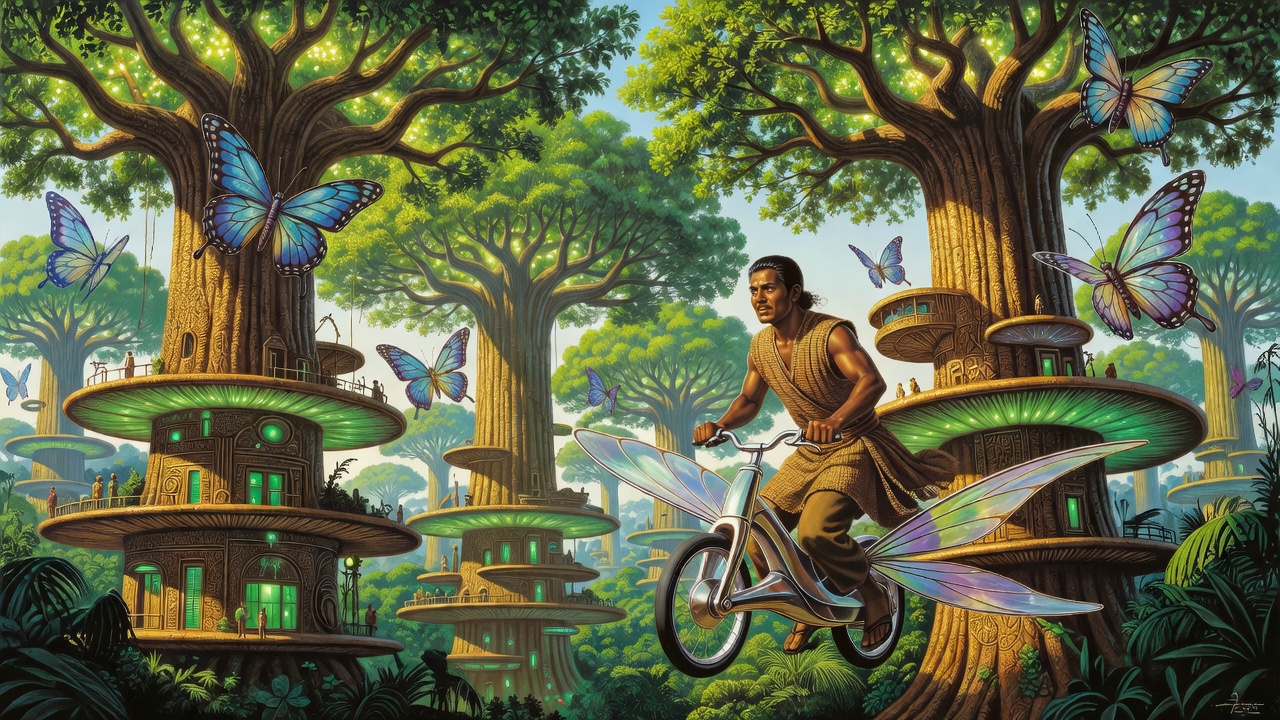
Theroc is an independent jungle world covered by the worldforest, ruled by a Father and a Mother, Idriss and Alexa when the saga opens. Therons live in the fungus reef, a vast shelf mushroom grown on the worldtrees and carved into rooms, among condorflies and wyverns.
The worldforest is one mind. Each worldtree is a manifestation of the whole forest, and so is every sapling carried away from it:
“What one treeling knew, they all knew”
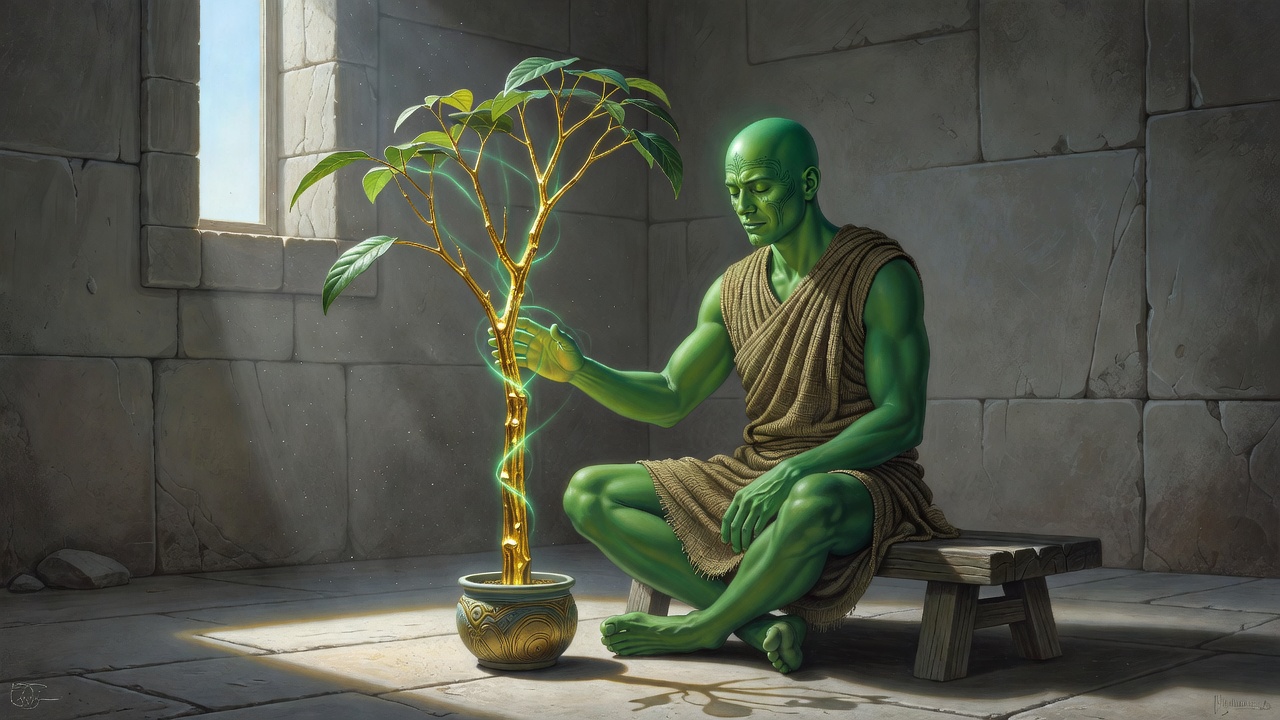
Green priests are the forest’s servants and its voice. A Theron who “takes the green” turns hairless and emerald-skinned. With a hand on a worldtree or on a treeling, a sapling carried in an ornate pot, a priest speaks by telink to any other priest, instantly, wherever a treeling grows. It is the only instant communication humans have, and that is power: by the sixth book the priests refuse to serve the Hansa at all while Basil rules it.
What the forest is comes out in the second book. It is the verdani, the elemental mind that lost the ancient war and has been hiding on Theroc ever since, and its old enemies remember it. Hydrogues and faeros clash over Theroc at the end of the second book and leave much of the forest in flames; as the war widens, the verdani’s own kind come to defend it, thorny treeships that stand guard over the planet. The fungus reef, burned and rebuilt, becomes the capital of Peter and Estarra’s Confederation.
The elementals and their ancient war
The saga begins with an experiment. In 2427 the Hansa tests the Klikiss Torch, an ancient device that opens a wormhole and drops a neutron star into a gas giant, on Oncier, turning it into a small new sun. Watching from his warliner, Adar Kori’nh thinks:
“Disposable planets and disposable suns… how very Terran.”
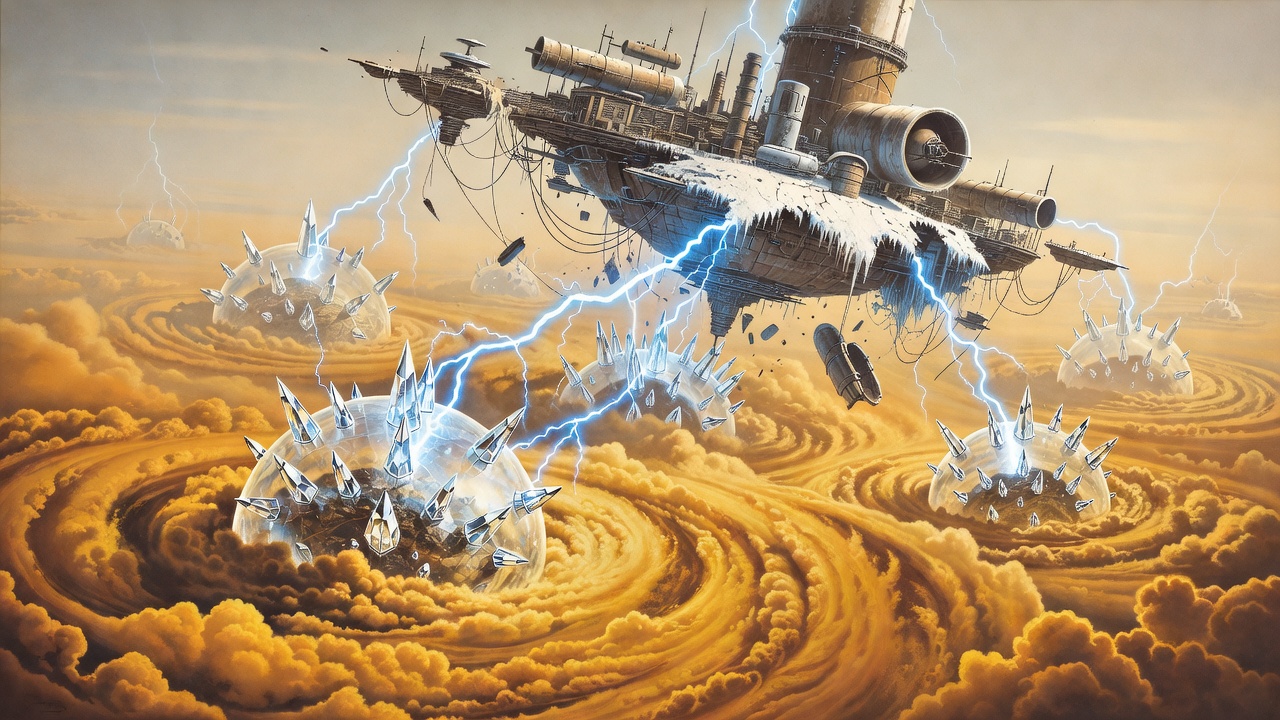
There were hydrogues inside Oncier. The survivors answer with diamond-hulled warglobes rising out of the clouds: they smash Roamer skymines and one of Oncier’s moons, forbid the gas giants to everyone else, and send an emissary to the Whisper Palace who kills King Frederick. The elemental war has restarted, and over the next books the other three powers come back into it.
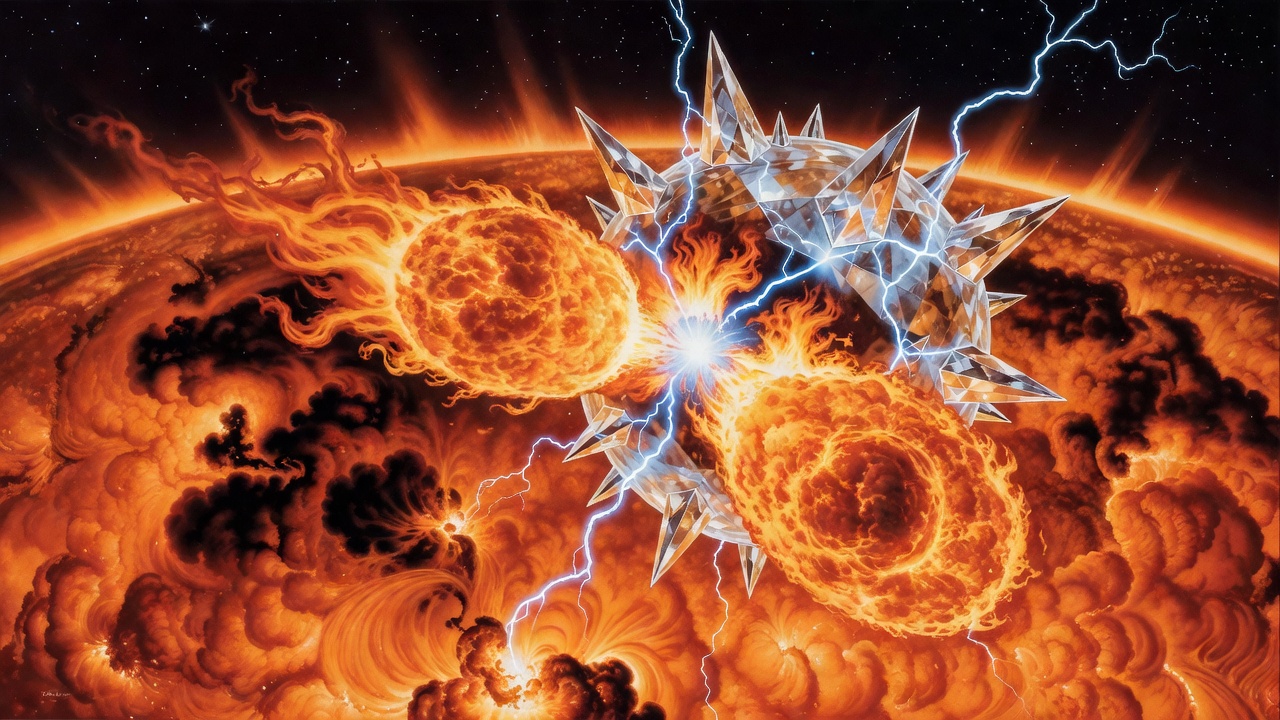
The hydrogues are beings of fluid quicksilver who travel between their worlds by transgates; when they deal with humans they take the shape of a Roamer they killed. Their old allies the faeros, fireballs that live inside stars, fall out with them this time, and their battles inside suns put stars out, one of Ildira’s seven among them. The wentals return when Jess Tamblyn finds a remnant of them in a nebula and is remade by them. The verdani stir on Theroc.
As the fourth book closes the hydrogues bring their warglobes to Ildira, and in the fifth they offer the Ildirans survival if they will help destroy humanity; Jora’h, Mage-Imperator since the end of the second, reluctantly agrees. But when the hydrogues make their last assault on Earth at the end of that book, the Solar Navy turns on them at the last moment, the treeships and the wentals join the fight, and the hydrogues are beaten back into their gas giants. Then the faeros turn. Fused with Rusa’h, the rebel Designate, now the faeros incarnate, they burn Ildiran souls in the sixth book, take the Prism Palace and set the worldforest alight as it ends, and rage on through the seventh until the wentals and verdani seal them back inside their suns.
The Klikiss and their robots
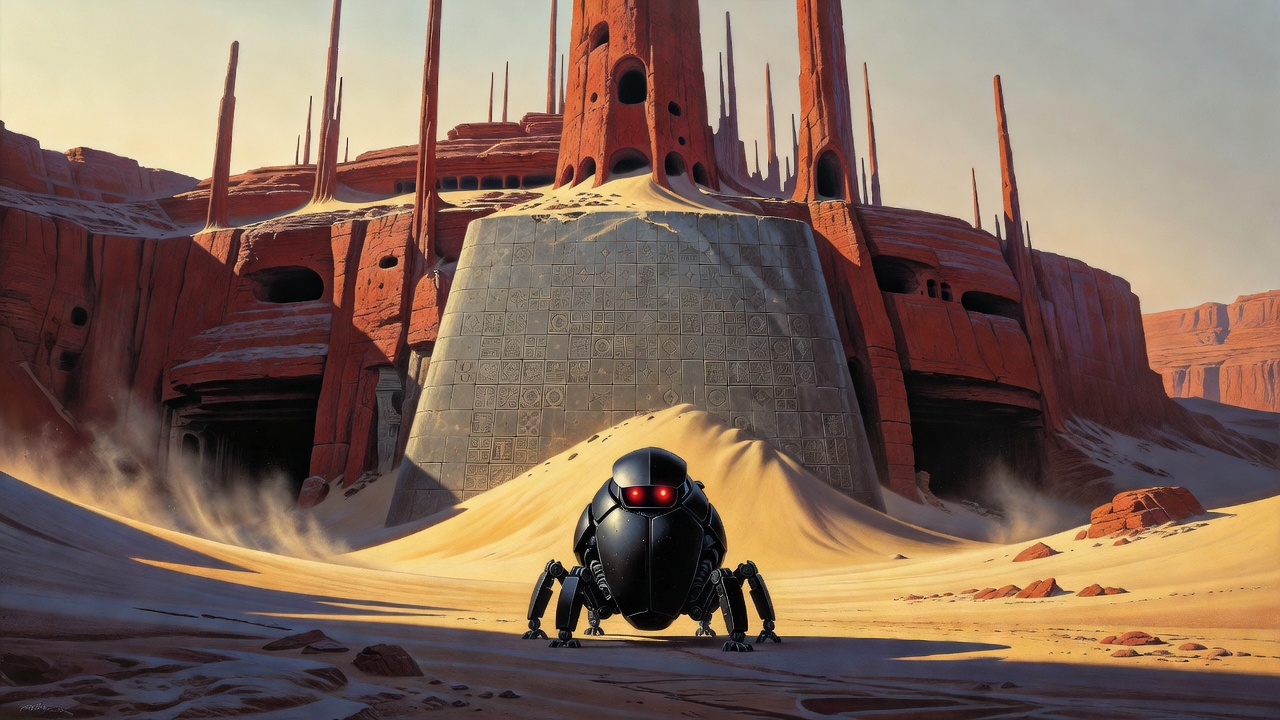
The Klikiss were a race of giant insects that vanished from the Arm thousands of years ago, leaving only empty cities, cliff warrens and tunnels on worlds such as Rheindic Co, Corribus and Llaro. The xeno-archaeologists Margaret and Louis Colicos found the Torch on Corribus by matching ideographs on its walls to the coordinates of neutron stars. The ruins hold transportals too: flat trapezoidal stone walls tiled with coordinates that step a traveller from one Klikiss world to another. The Colicoses find one in the first book; in the second the spy Davlin Lotze learns how to work them, and in the third the Hansa starts sending colonists through to settle the empty worlds.
The Klikiss also left robots: tall black beetlelike machines with six limbs and red optical sensors, first found on an ice moon of the Ildiran world Hyrillka. They say they remember nothing of their makers, and they make themselves useful. It is a lie, as a hydrogue emissary tells the Mage-Imperator in the fifth book:
“Long ago, we helped the Klikiss robots destroy their creator race.”
Led by Sirix, the robots mean to do the same to humanity. Their code lies hidden in the EDF’s Soldier compies, which turn on their crews and take most of the fleet in the fifth book; with stolen battleships the robots raid human worlds in the sixth. By then the Klikiss themselves have come back, pouring through the transportals to reclaim their planets from the colonists who have just moved in: hives each ruled by a breedex, a beetle-like hive mind, at war with one another and with anyone in their way.
What came after
The seventh book closes the war: the hydrogues contained, the faeros sealed in their suns, the Klikiss gone again through a transportal for thousands of years, Chairman Basil fallen, and Peter and Estarra’s Confederation governing humanity from Theroc. A short novel, Whistling Past the Graveyard (2016), bridges to a sequel trilogy from Tor, The Saga of Shadows: The Dark Between the Stars (2014), Blood of the Cosmos (2015) and Eternity’s Mind (2016). Twenty years after the elemental war, under the Confederation, the exiled Klikiss robots find an ally in the Shana Rei, the creatures of darkness from the Ildiran epic. The Dark Between the Stars was a 2015 Hugo nominee for Best Novel, the only major-award nomination anywhere in the universe.
In 2026, with the rights back from his publishers, Anderson is reissuing all of it through WordFire Press as The Complete Saga of Seven Suns, thirteen volumes with new cover paintings and re-proofed text, in a crowdfunding campaign launching on 13 October 2026. The campaign also offers a new book, Roamer’s Wrath, which fits between the third and fourth novels: a mother’s search for justice after a tragedy inflicted by the Hansa.
The powers of the Spiral Arm at a glance
| Power | Home | What it is | What it wants | Books |
|---|---|---|---|---|
| The Hansa (Terran Hanseatic League) | Earth and its colonies; the Whisper Palace; the EDF on Mars | A trading league turned government, with a figurehead Great King and a Chairman who rules | Ekti, colonies and control, on the Chairman’s terms | I–VII |
| The Ildiran Empire | Ildira under seven suns; Mijistra and the Prism Palace | An ancient, nearly human people of many kiths, joined to the Mage-Imperator by the thism | To be ready for the hydrogues’ return, which its rulers have planned for in secret | I–VII |
| The Roamers | Skymines on gas giants; hidden bases; Rendezvous, an asteroid cluster round a red dwarf | Independent clans descended from the Kanaka, the chief producers of ekti, led by a Speaker | Independence, and trade on their own terms | I–VII |
| Theroc and the green priests | Theroc: the worldforest and the fungus-reef city | An independent forest world under a Father and a Mother; its green priests serve the forest and carry telink | To stay independent and serve the worldforest | I–VII |
| Hydrogues | The high-pressure cores of gas giants | Elemental beings of the deep, in diamond-hulled warglobes armed with lightning and ice | Revenge for Oncier, and the gas giants to themselves | I–V |
| Faeros | Inside stars | Elemental living fire; the hydrogues’ allies in the ancient war | First to fight the hydrogues; then, through Rusa’h, to burn Ildiran souls and seize Ildira and Theroc | II–VII |
| Wentals | Water: one mind in all the water they touch | Elemental living water, left all but extinct by the ancient war | To live and spread again across the water worlds | II–VII |
| Verdani | Theroc’s worldforest; the treeships | The elemental mind of the worldforest, loser of the ancient war | Survival; its treeships defend Theroc and fight the hydrogues and the faeros | I–VII (revealed in II; treeships from IV) |
| The Klikiss | Ruined cities on empty worlds, linked by transportals | A giant insectlike race of warring hives, each ruled by a breedex; vanished thousands of years ago | Their worlds back from the humans who have settled them | Ruins I–V; the race returns at the end of V |
| Klikiss robots | First found on an ice moon of Hyrillka; later stolen warships | Black beetlelike machines left by the Klikiss, posing as amnesiac helpers | To destroy humanity, as they helped destroy their makers | I–VII |
| The Confederation | Theroc | Peter and Estarra’s union of Theroc, the Roamers and the colonies that break with the Hansa | Human government without Chairman Basil | VI–VII, and the sequels |
Notes
- Between Star Wars and Dune. In 2002 Anderson told Publishers Weekly he hoped readers would find his universe “right in between Star Wars and Dune”: the colour, aliens and space battles of the one, the pageantry and ecological themes of the other. Dune is his favourite science-fiction book.
- Models. In 2002 he compared the saga to Robert Jordan’s Wheel of Time and Terry Brooks’s Shannara; in 2013 he called it a science-fiction version of George R. R. Martin’s A Song of Ice and Fire.
- Landscapes. The thin red stone fins and caves of Colorado’s Garden of the Gods gave him some of his Klikiss landscapes.
- Designed before written. Before he began, Anderson hired a comic artist to visualize the world: close to fifty sketches of Ildiran architecture and clothing, the Prism Palace and Theron tree buildings, and three paintings (a Roamer on a skymine deck, Klikiss ruins with beetle-like robots, a hydrogue city), which he kept as reference while writing.
- Planned as five, finished at seven. Hidden Empire was announced in 2002 as book one of a projected five; the saga ended at seven in 2008. Anderson later wrote that all of it “would probably be too cost-prohibitive to film.”
- The glossary. The novels carry a glossary at the back, and Hidden Empire a timeline; this page’s terms follow them.