The Saga of Seven Suns · Prequel and adaptations
Veiled Alliances, and the Screen
A prequel that began as a comic, became a novella, and became the one piece of the saga ever animated.
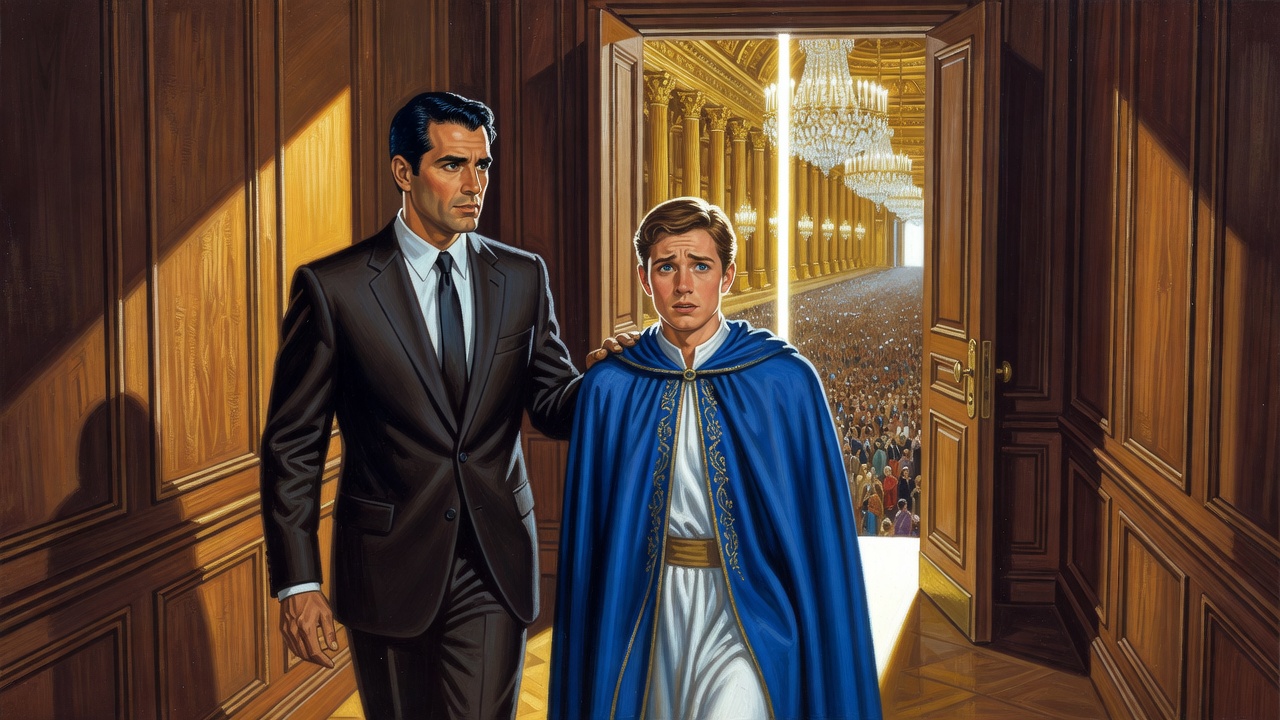
Veiled Alliances is where the saga begins in story time, and where it first became pictures. It is a prequel told first as a 96-page original graphic novel, written by Kevin J. Anderson with art by Robert Teranishi and colours by Wendy Fouts-Broome, published by DC’s WildStorm imprint on 1 February 2004, between A Forest of Stars and Horizon Storms. It is set nearly two centuries before Hidden Empire, when the Ildiran Empire first meets humanity, and in its short length it lays the foundation stones of the whole series: the first green priest, the first human-run skymine, the lost colonists of Dobro, the puppet Kings of Earth, and black machines entombed in an alien city.
In 2011 Anderson rewrote it as a prose novella. In 2015 a small mobile studio turned the novella into the only screen version of anything in the saga, a six-minute animated pilot inside a mobile app, and released one episode. No film or television option on the novels has ever been announced. This page tells the prequel’s story in full, follows it from page to prose to screen, and ends with where the saga stands this week.
The summary follows the comic, filled out from the prose where only the prose has the detail (marked “in the prose”); the story’s quoted lines come from the prose. Like every page here, it spoils everything, including what the prequel’s set-ups become in the novels.
The Delegation at the Whisper Palace
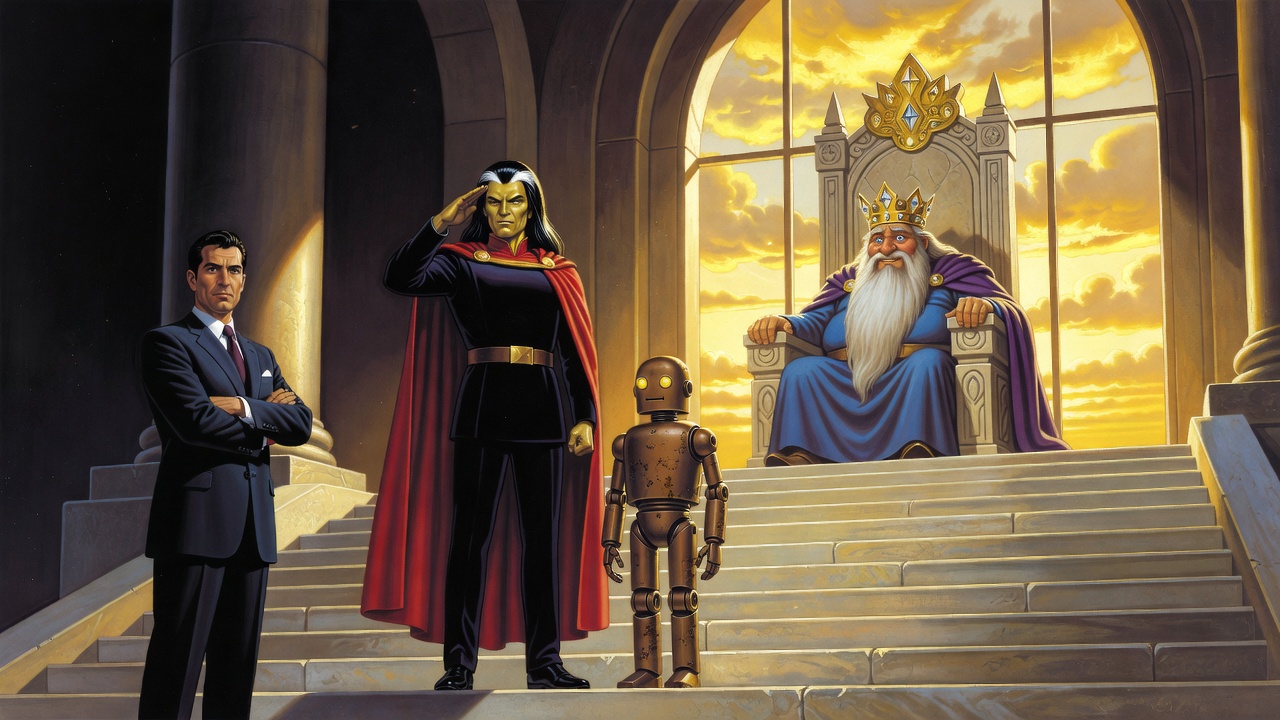
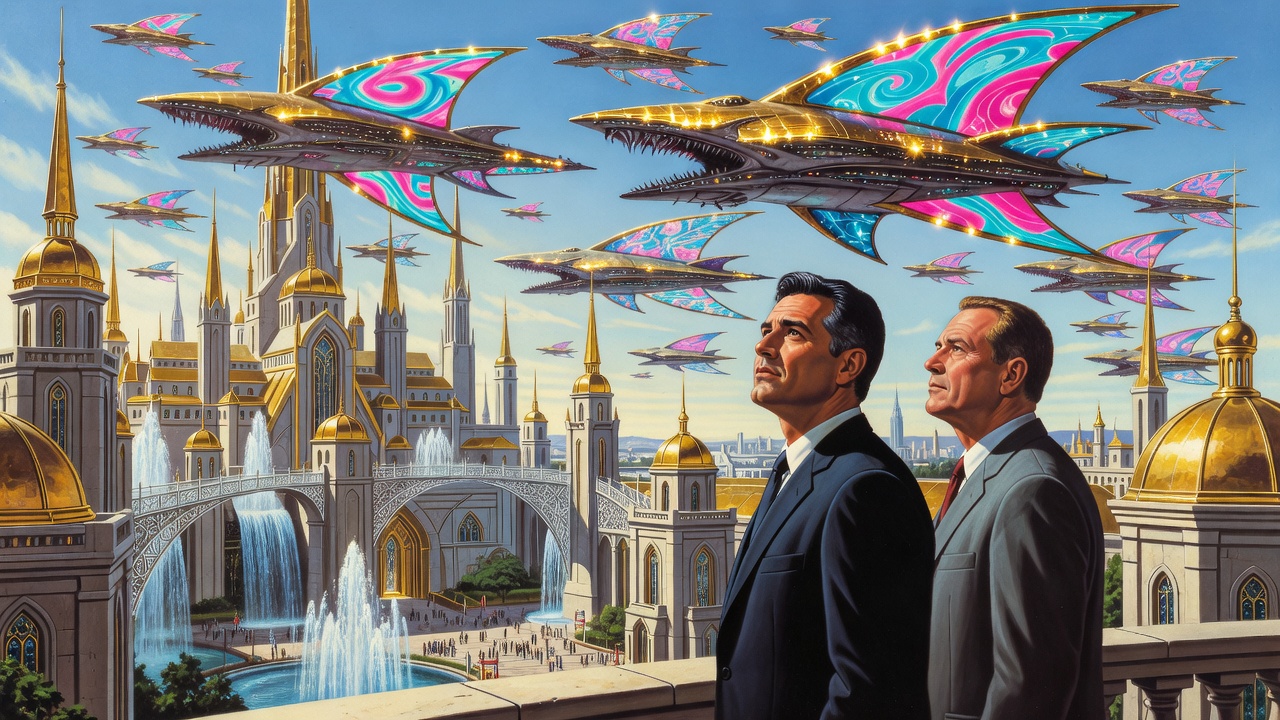
Eleven generation ships left a tired Earth in the early 2100s and were all but forgotten. Five years before the story opens, the Ildiran Solar Navy came upon the first of them, the Caillié, and settled its colonists on a forest world called Theroc; it has since found nine more. Now, in the year the prose dates 2249, the Ildirans send a formal delegation to Earth itself, and warliners with spread solar sails and painted hulls fill the sky over the Whisper Palace.
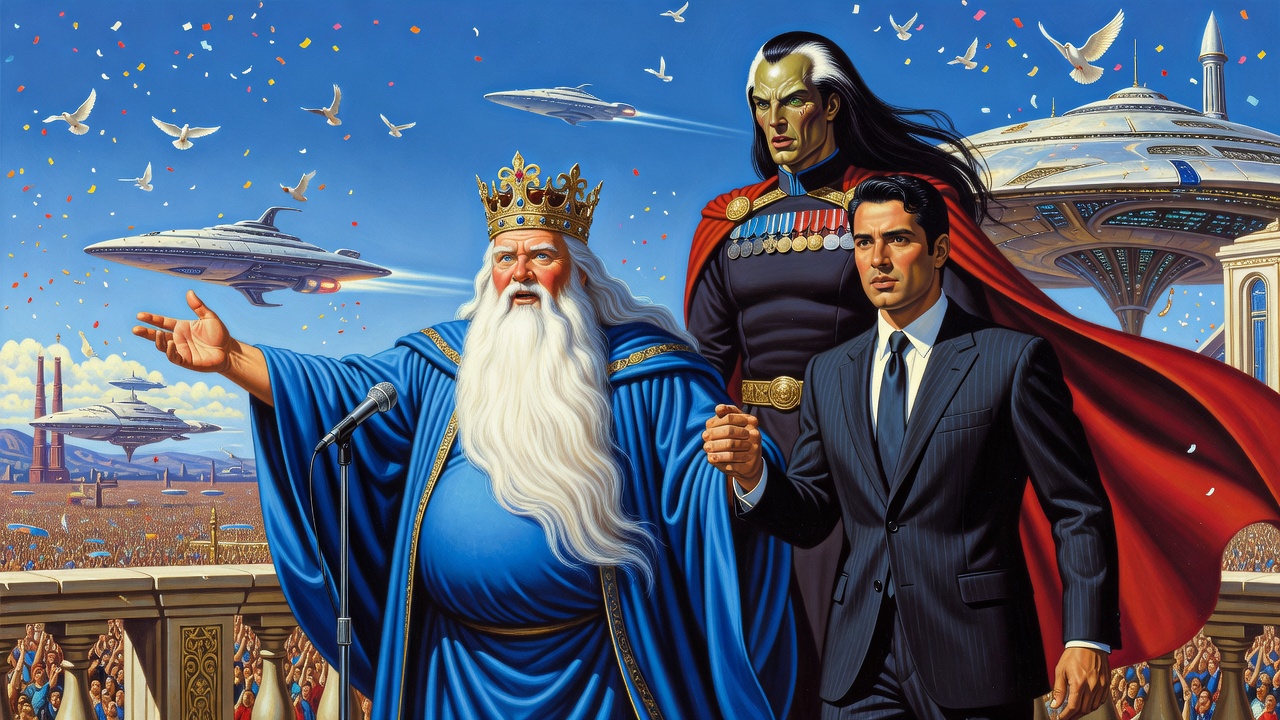
Chairman Malcolm Stannis of the Terran Hanseatic League watches from a balcony. He is the youngest Chairman the Hansa has ever had, and in the prose he got there partly by bribery and blackmail. The King, old Ben, is a former unknown actor whom the Hansa dresses, coaches and secretly pays. Stannis’s instructions are short:
“Remember, say nothing important and agree to nothing.”
He will write the King’s reply himself.
Adar Bali’nh, commander of the Solar Navy, lands his flagship in the palace plaza. With him comes OX, a teacher compy rescued from the generation ship Peary, who left Earth 149 years ago, before the Whisper Palace was built. In the Throne Hall the Adar offers humanity the Ildiran stardrive and hundreds of habitable worlds nobody has claimed, and the King, with a glance at a man in the shadows of an alcove, offers thanks and nothing more. At the banquet OX hands over the logs of the ten rescued ships. Stannis, needling, finds it remarkable that only one was lost, the Burton; the King hurries to say how grateful humanity is for all the Ildirans’ help, and the Adar promises the search will go on.
The First Green Priest
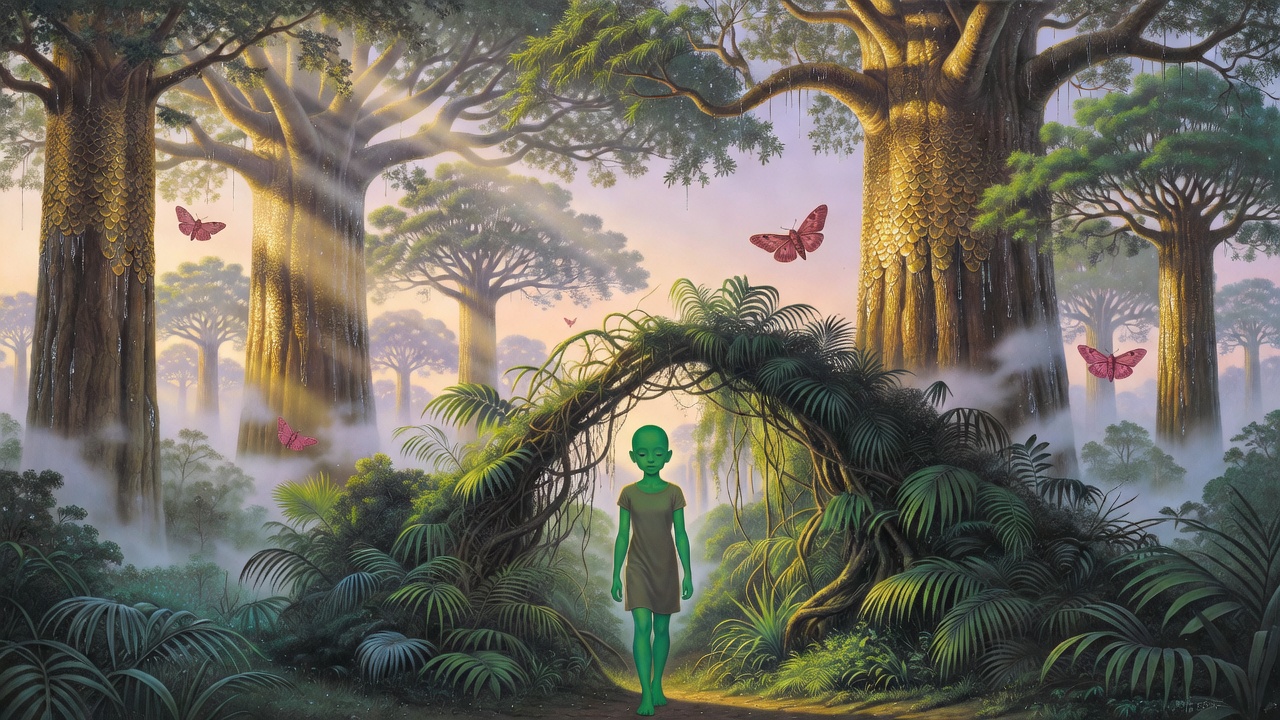
On Theroc, fourteen-year-old Thara Wen runs into the worldforest from Sam Roper, a colonist with a knife. In the prose she hides in an abandoned, vine-covered cargo shuttle and then deep in a thicket, where the trees close around her and pour the forest’s memories into her mind. She walks out at dawn hairless, her skin a rich emerald green, joined to the worldforest: the first green priest.
The forest has seen more than her. In the village, where the elected leader is holding Roper, Thara knows what he meant to do to her and what he has done before, and she leads the colonists to the hidden graves of his earlier victims.
“The forest sees everything,” Thara said. “And it forgets nothing.”
In the prose, at her word, Roper is left bound on top of the canopy at dawn for the worldforest to judge, and a wyvern, one of Theroc’s giant predatory insects, takes him. Every green priest of the novels, and the instant tree-to-tree telink they carry between worlds, begins with this girl.
The Lost Ship and the Skymines
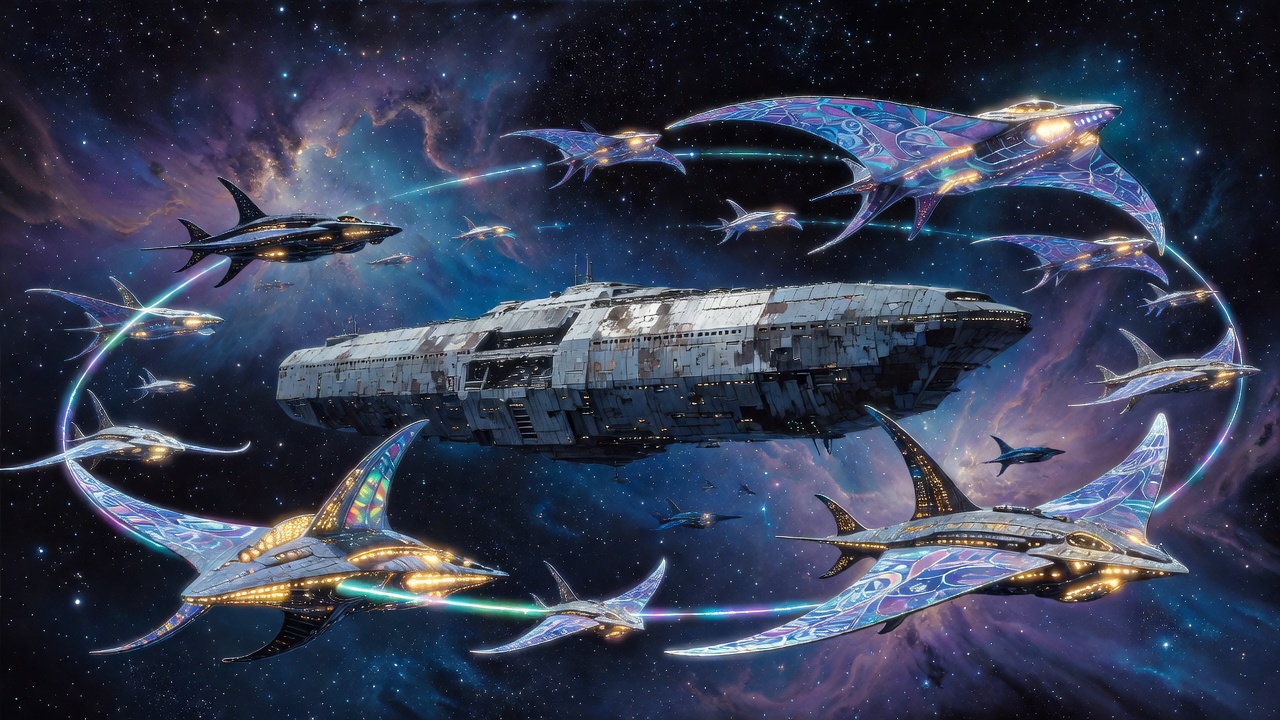
The last missing ship is not lost, only dying. After a century and a half of fruitless flight and an ion storm, the crippled Burton is starving. Its twenty-first captain, Chrysta Logan, faces a mutiny stirred up by Dario Ramirez, who promises austerity measures of his own; in the prose she cannot bring herself to fire on her own crew and ends up in the brig. Then seven Ildiran warliners appear. The frightened mutineers let their captain out, and she takes command again and grants an amnesty. The Ildirans tow the Burton to Dobro, a dry grassland world with a small Ildiran splinter colony. Its Designate, one of the Mage-Imperator’s sons, tells Chrysta that Dobro can support a much larger population.
“It will be an interesting experiment.”
When Ramirez fawns, Chrysta is clear that he is sadly mistaken if he thinks she will ever trust him again.
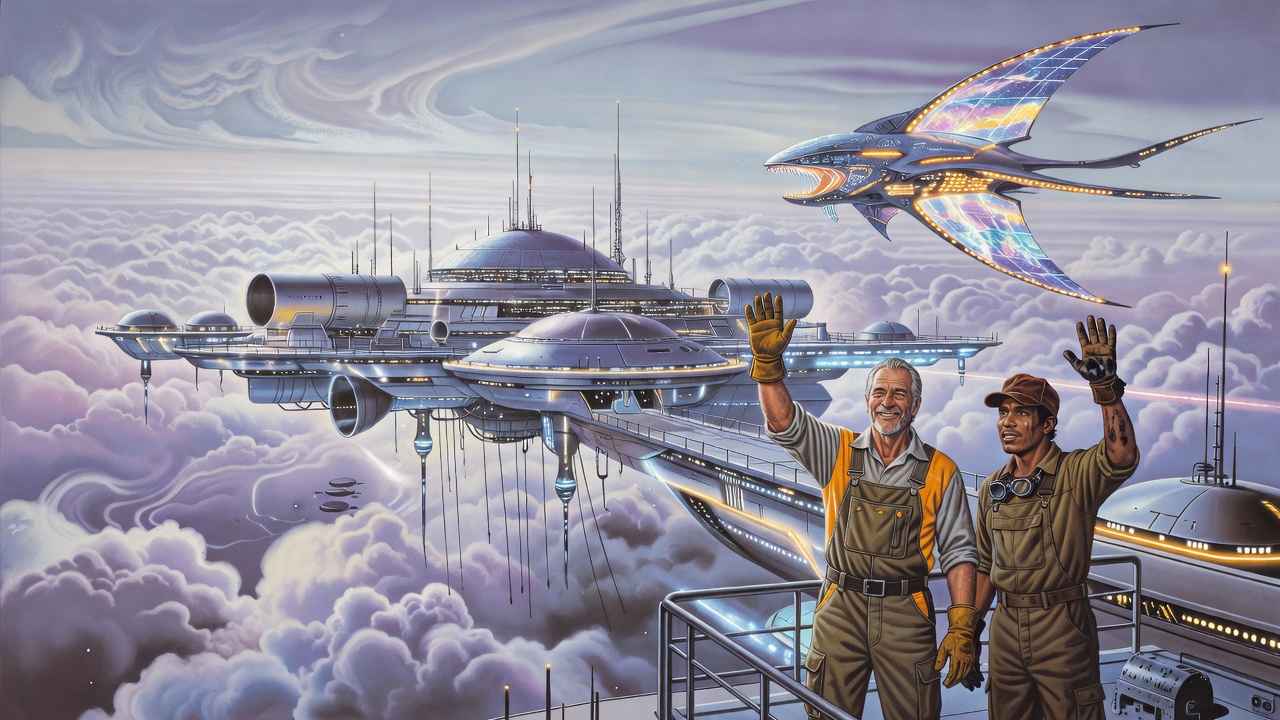
Another ship’s people get a better bargain. The Ildirans have picked up refugees from the Kanaka, whose colony on Iawa failed, and their clan leader, Corey Kellum, talks his way into a lucrative contract to run the three skymines on the gas giant Daym: ekti plants that have worked for four hundred years and that the Ildirans have never made profitable. Their engineers find their first skymine a patched-up wreck, held together (in the prose) with twine and prayers, and run it anyway with a fraction of the Ildiran crew. Within weeks its ekti output matches the Ildirans’ best, and the Kanaka promise to run circles around the other Ildiran skymines. This is the beginning of the Roamer clans and their skymining trade.
Off Script, and Dobro
The Ildirans’ farewell is a spectacle, with crowds gathered to watch the warliners leave (in the prose, marching bands, confetti cannons and three hundred white doves). The King announces that the Adar has graciously offered his warliners to assist Earth’s explorers. Then, on the balcony, Ben wanders off his text and suggests Earth would gain by joining the Ildiran Empire. Stannis has the sound cut, pleads technical difficulties, and steers the old man away.
“That wasn’t in the script!”
In private, the Chairman resolves that the old actor will do no more damage.
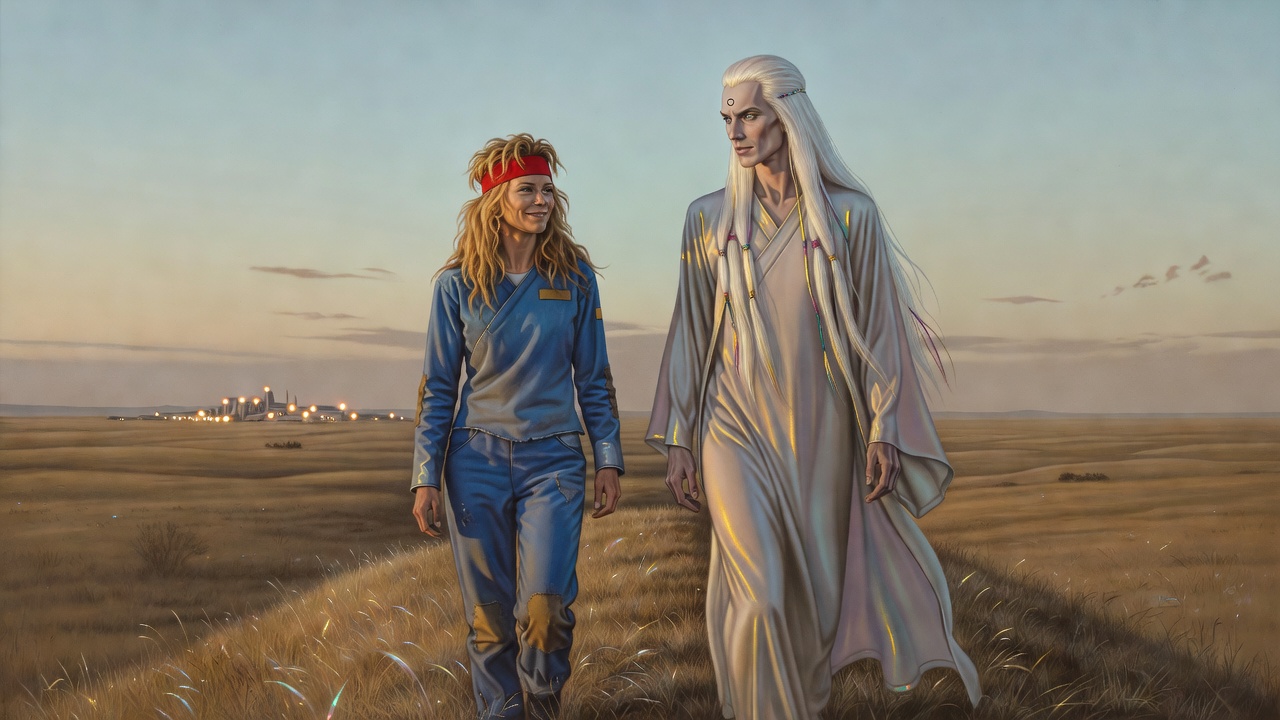
On Dobro, Chrysta proposes a close alliance with the Designate, partly to cement her own authority over the crew. They move to first names, and a union of formality becomes a real one. Later Ramirez turns on her, and the confrontation ends with the Designate crying out over his love, Chrysta, and his child. There is violence, some of the Burton’s people resist, and the Ildirans end up holding the humans. After a long stay in Dobro’s dim sunshine the Designate reports to Prime Designate Cyroc’h (a name the novels’ Mage-Imperator also bears) and to a Mage-Imperator eager to hear about the humans. His finding is the one that matters: Ildirans and humans can interbreed.
The Burton’s colonists are told that no one from Earth will ever look for them on Dobro. That sentence is the seed of the secret breeding camps that A Forest of Stars uncovers nearly two centuries later, where the novels hold Nira Khali captive.
Five Years On
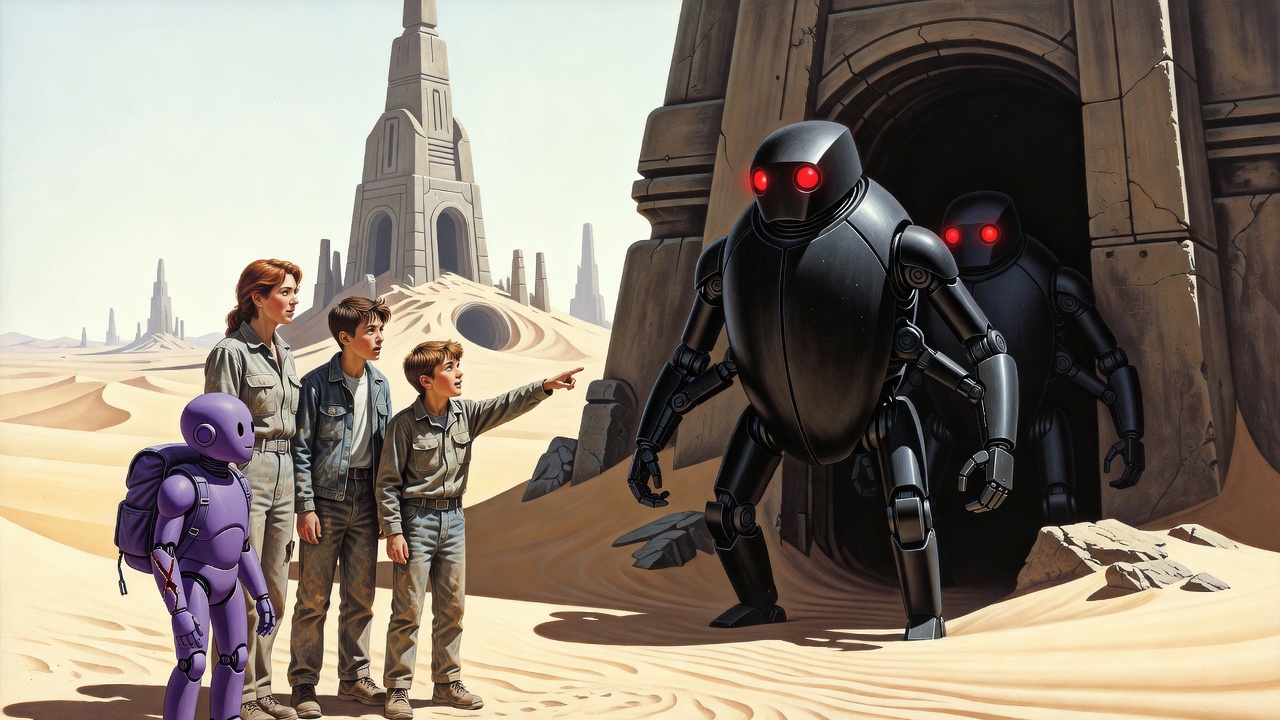
The prose dates its second half 2254. The Solar Navy now ferries human survey teams to empty worlds, and the Hansa pays a bounty for each report. Madeleine Robinson, whose family lost everything after her husband’s fatal accident, signs on with her sons Derek, seventeen, and Jacob, thirteen, and their battered compy TZ. An Ildiran warliner sets them down on a world of Klikiss ruins and will be back for them in seven weeks. Then Madeleine is woken with urgent news: there are robots in the ruins, still active. The black machines say the Klikiss race created them, and that they remember nothing more. The Ildirans have uncovered such robots elsewhere; they are all that is left of the vanished Klikiss. Readers of the novels know what that amnesia is worth.
The rest of the ending comes in pieces. Theroc gets a request from the Hansa: King Ben wants a report. Because of her bond with the worldforest, Thara is asked to help, and a small piece of the forest is to be planted on Earth; soon someone hears Thara directly through a worldtree, her message arriving instantly. It is the first telink. On Daym, a skymine takes too much damage and goes down. On Earth, Stannis finds other tasks for OX in the Whisper Palace. Then the news reaches Theroc: King Ben is dead, and before he died he granted Theroc its independence forever, which is why Theroc stands outside the Hansa through all seven novels. Outside the palace the crowds grow restless while the Chairman’s people ready young George, carefully coached, for his coronation. Hidden Empire opens on the same machinery, still running.
The Comic, Then the Novella
The comic came out with the saga less than half written, though Anderson’s June 2002 author’s note for Hidden Empire says he had already written it by then. Reviewers admired the art and doubted the script. Publishers Weekly praised the drawings and said the story
“feels more like the rushed synopsis of a story than the story itself”
and the Slings & Arrows guide thought the art carried the book; The Internet Writing Journal called it a treat for fans.
In October 2011 Anderson published his own prose version as an e-book original, followed that December by a WordFire Press trade paperback that also prints the complete graphic-novel script and an afterword. David Colacci’s unabridged audiobook followed in July 2012, and in November 2016 WordFire collected it with Whistling Past the Graveyard, the short novel that bridges to the sequel trilogy, as The Saga of Seven Suns: Two Short Novels. Its copyright page calls it a different version of the comic’s story.
The differences are of texture more than plot. The prose runs to 28 chapters in two dated parts, 2249 and 2254, each chapter headed with its viewpoint character’s name, as in the novels. It adds interior thought and backstory, and fleshes out minor figures such as Stannis’s adviser Liam Hector and the Theroc village leader Norris Brovnik. Small facts drift: the Daym skymines hold more than a thousand Ildiran workers in the comic and more than four thousand in the prose, and where the comic’s colourist gave Daym reds, rusts and ochres, the prose clouds are lavender, grey and white. Where the comic’s lettering can be checked, whole lines carry over almost word for word, so in those scenes the novella follows the old script closely. Readers split on it as they did on the comic, between a welcome appetiser and a rush.
Confrontation at the Prism Palace
On 24 September 2015 Bushi-go, Inc., a small mobile developer in San Mateo, California, released a free app called Veiled Alliances. Anderson’s blog announcement that October opened with its tagline:
“You never get a second chance to make First Contact.”
Inside was a six-minute animated “appisode”, “Confrontation at the Prism Palace”, the pilot of a serial adaptation of the novella. It was animated in the Unreal game engine so the viewer could swing the camera around the scene without interrupting the action. Robert Picardo, the Doctor of Star Trek: Voyager, and Kyle Hebert, the English voice of Gohan in Dragonball Z, lent their voices; which characters they played is not recorded on any page found. The pilot was free on iOS, Android, Amazon and Windows Phone; later episodes were to cost a dollar each and add a “subtext engine” giving access to the main characters’ innermost thoughts in real time, and the Amazon listing promised twelve appisodes in all.
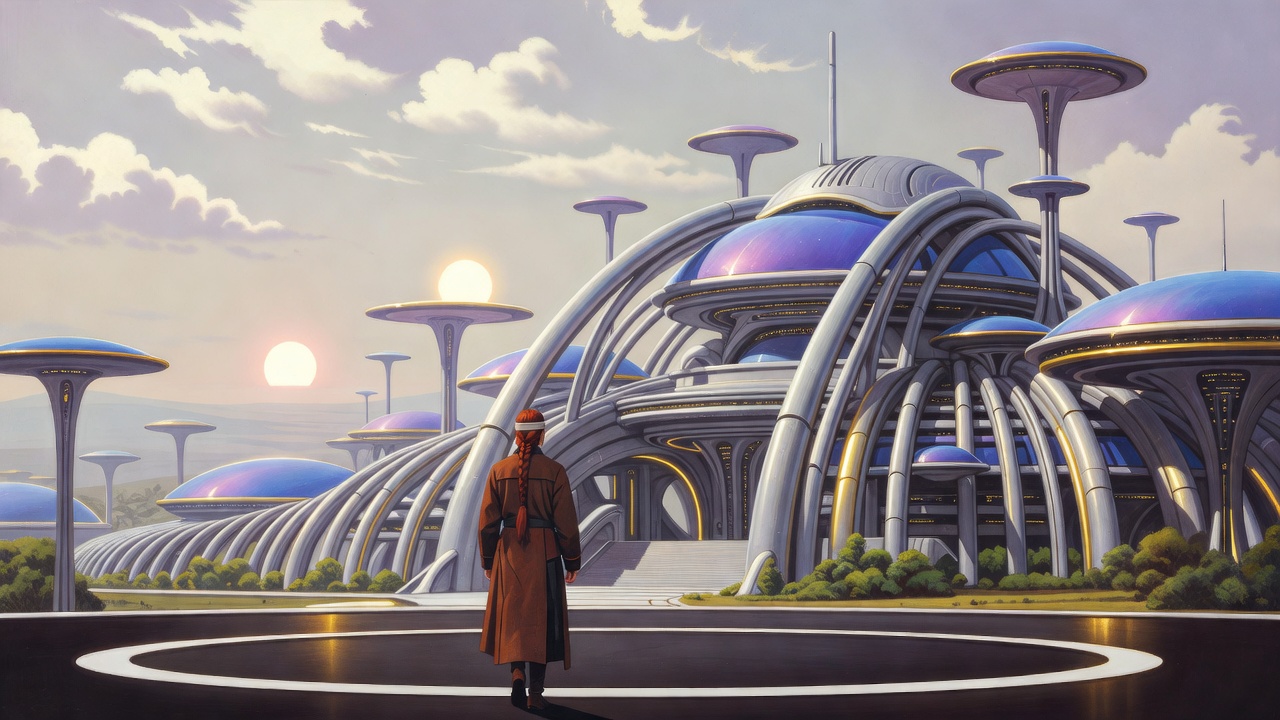
What the six minutes stage is not recorded either: the Prism Palace is the Mage-Imperator’s palace on Ildira, and the novella’s meeting of the two peoples happens at Earth’s Whisper Palace. The developer’s press art shows an alien city of ribbed, arching silver-grey structures and mushroom-capped spires under a hazy sky with two suns, and a figure in a long rust-brown coat with an auburn braid.
No second appisode was ever announced, and none appears on any page found. As of 7 October 2026 the app is gone from Apple’s App Store, Google Play and the Microsoft Store, the developer’s site is a parked domain, and the last trace is an Amazon Appstore listing still at version 1.0. It remains the only time any part of the saga has reached a screen.
The Film Nobody Optioned
No studio has ever announced an option, a rights deal or a development project for a film or series of The Saga of Seven Suns, and none has turned up as of this writing. Anderson had his own view of that in a July 2014 blog post: when he wrote X-Files novels, Chris Carter told him to write something too big to afford as an episode.
“With words, you see, I’ve got an unlimited special effects budget.”
He then listed how he had spent it across the saga and its sequel: an energy-harvesting station inside a blazing nebula, a derelict space city full of the bodies of an extinct race, beings of pure fire, a race living in diamond-hulled chambers at the cores of gas giants. His verdict:
“Yeah, all that would probably be too cost-prohibitive to film.”
Booklist’s reviewer had said much the same of the comic: the art made it look like the several million dollars it would cost as a movie. The screen news in Anderson’s own record concerns other books: an option on Clockwork Lives in 2018, and Persephone, which his October 2026 campaign update says is in development as a feature film.
2026: A Board Game and Thirteen Volumes
In a mid-September 2026 campaign update Anderson showed new paintings of the saga’s worlds, ships, characters and events, more than ninety never seen before, to be sold as a digital art portfolio; much of the art, he wrote, was made for an extensive Saga of Seven Suns board game, still in development. Followers voted on a bookmark among four character paintings, Sirix, Cesca, Bron’n and Estarra, and Estarra won. The campaign pages name no publisher, title or release date for the game.
The occasion is The Complete Saga of Seven Suns, a WordFire Press crowdfunding campaign on BackerKit that launches on 13 October 2026: the whole universe reissued in thirteen volumes, some two million words, re-proofed and checked for consistency, with new cover paintings, now that Anderson has the rights back from his former publishers. Among the thirteen is a new book, Roamer’s Wrath, set between Horizon Storms and Scattered Suns: a mother’s search for justice after a tragedy the Hansa inflicts, with two more Seven Suns stories, “Feet of Clay” and “Hole in the Wall”. The comic where it all began has been out of print for more than fifteen years, and Anderson is offering a few copies to backers.
What the prequel sets up
- Green priests and telink: Thara Wen is the first green priest, and her instant message through a worldtree is the first telink, the network every novel communicates by.
- Theroc’s independence: granted by King Ben before he dies; Horizon Storms recalls the grant as made under old King Ben and Chairman Malcolm Stannis.
- Puppet Kings: Ben, then George, chosen and coached by the Chairman; in the novels Basil Wenceslas runs King Frederick and then Peter the same way.
- The Roamers: the Kanaka clans’ skymines on Daym are the start of the Roamers’ ekti trade.
- The stardrive: the Ildiran gift that lets the Hansa spread across the Spiral Arm.
- Dobro: the Burton colonists, Chrysta Logan’s alliance and its violent end, and the promise that no one will look for them become the hidden breeding camps revealed in A Forest of Stars.
- The Klikiss robots: found awake and claiming to remember nothing; their long deception runs through all seven novels.
- OX: kept at the Whisper Palace; in Hidden Empire he is the ancient Teacher compy who trains the new Prince Peter.
Notes
- How long before Hidden Empire? The prose dates its halves 2249 and 2254, and its title page says the story takes place 183 years before Hidden Empire, which opens in 2427. Hidden Empire’s own text puts the Ildirans’ rescue of the first generation ships 183 years back, which is the Caillié’s year, five years before the story opens. Other sources say a century, or a few hundred years. This page says nearly two centuries.
- Stannis’s dates: Hidden Empire’s appended list of Chairmen gives Malcolm Stannis 2243–2253 (the prose agrees on the start: elected six years before 2249), yet the prose dates its second half 2254 and the comic still has Chairman Stannis at George’s coronation.
- The comic’s year: Anderson’s September 2026 campaign update dates the graphic novel to 2002; Publishers Weekly’s review (2 February 2004) and his own 2011 posts say 2004. 2004 is right for publication; 2002 is when his Hidden Empire author’s note says he had written it.
- The prose’s year: the Slings & Arrows guide says Anderson revised the story as a novel in 2016; the prose came out in 2011, and 2016 is the year of the Two Short Novels collection.
- Not settled here: how King Ben dies, what brings down the Daym skymine, exactly what happens to Chrysta and Ramirez, who travels with the worldforest cutting, and the name of the Robinsons’ world (a fan transcription of Hidden Empire’s timeline has Madeleine Robinson reporting the first Klikiss ruins, on Llaro, in 2254).
- The app’s cast: Robert Picardo and Kyle Hebert are credited; no page found says whom they voiced.